April 8, 1981
It was early morning in the Tucson desert — the kind of morning that is quiet in a way that feels earned, the light just starting to come up over the horizon. Two hunters were out with their rifles, looking for jackrabbits and birds. One of them spotted a blue jean jacket caught in a tree.
They called out. No answer. They walked closer.
There was a body.
In 1981, cell phones did not exist. The only way to reach anyone from out there was the CB radio in their truck, with a range of a few miles. One man stayed behind — understanding without being told that he was now the custodian of this woman until help arrived. The other jogged to the truck, raised someone on the radio, communicated what he knew, and turned back to wait.
When investigators arrived, they moved carefully through the scene. They could tell the deceased was female. Beyond that, very little. No purse. No identification. No signs of who she was or where she had come from. The desert had kept its secrets well.
What Happens to Jane Doe
The medical examiner preserved the body and her belongings carefully, holding them in cold storage while investigators hoped for a break. When none came — no identity confirmed, no family, no leads — she was buried in a potter's field. A grave marked by anonymity, surrounded by the quiet hope of those who worked the case that someday she would have a name again.
The case went cold. Years passed. The internet did not yet exist in any meaningful public form in 1981. There was no database a worried family could search, no website that published the names and descriptions of unidentified remains. Jane Doe lay in that unmarked grave while the world slowly changed around her.
Then technology caught up.
The Reconstruction — 2012
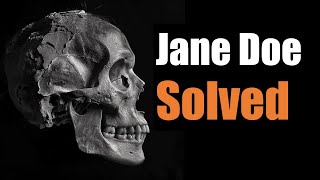
In 2012, with new funding and advances in forensic science, investigators took a significant step. The remains were carefully exhumed and a CT scan of the skull was conducted — sophisticated imaging technology that allows forensic experts to see bone structure in extraordinary detail, enough to build an accurate reconstruction of what the living person might have looked like.
The process is equal parts science and art. Specialized software processes the scan data and builds a three-dimensional model of the skull. Forensic artists then take that model and apply their knowledge of anatomy, tissue depth, and biological markers to add layers of muscle and skin. Some features — eye color, skin tone, hair — can't be determined from bone alone, so artists make educated guesses based on available data. The result is a face. A face given back to someone who had been without one for over thirty years.
That reconstruction was shared publicly. And this time, it worked.
Brenda Groat
Before she became Jane Doe in the Tucson desert, she was Brenda Groat — a young woman from Nashua, New Hampshire. She was known for her bright smile and the kind of quiet friendliness that made people comfortable around her. She loved art and creative writing. She worked at a local diner. She sketched in notebooks and helped organize community events. By most measures, she was living an ordinary life.
But people who knew her sensed a restlessness as she moved into her early twenties — a longing for something beyond the familiar. That restlessness made her vulnerable to the appeal of a man named John Kouser, a newcomer to Nashua whose mysterious presence caught her attention. The decision to leave New Hampshire with him was sudden. Brenda packed her life into a few suitcases and headed to Arizona — driven by love, or the hope of it, and the promise of something new.
She had never traveled far from home before.
John Kouser
John Kouser was with Brenda when she made that move to Arizona. His history is complicated and criminal. He was later arrested in connection with another case — the disappearance and murder of his wife, Diane Vanth, in 1995 — and served time in prison for that killing. In connection with Brenda's death, he has been named a person of interest. He has not been charged. He is presumed innocent.
Brenda's killer has not been brought to justice. The case remains open.
What this story does have is an ending to one part of it: after more than thirty years in an unmarked grave, Brenda Groat has her name back. That matters. It matters to the people who worked this case across decades, and it matters to anyone who believes that every person deserves to be known — even after they are gone.
We hope her killer will one day be brought to justice too.